Postpartum anxiety & depression: gentle healing when motherhood felt overwhelming
Oct 08, 2026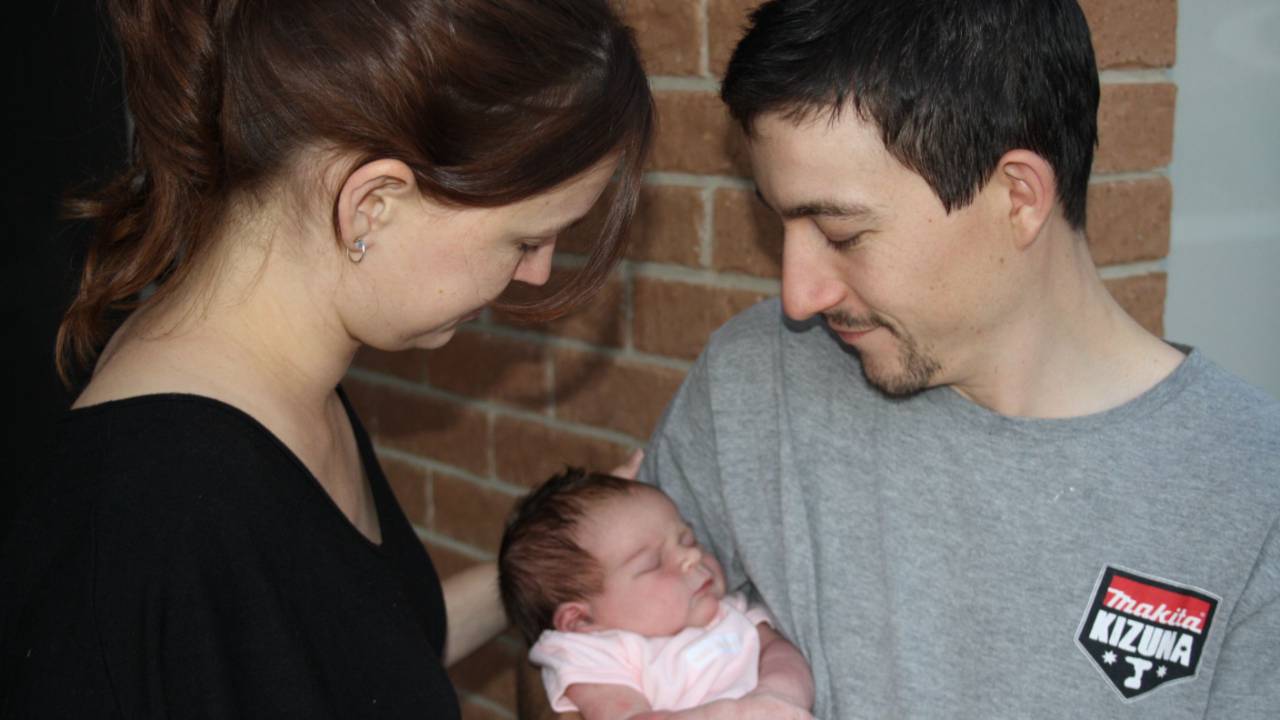
There’s a moment after birth — sometimes hours later, sometimes months — when the dust settles just enough for you to realise that the story you lived wasn’t the story you expected.
Maybe your birth was complicated. Maybe recovery was harder than you imagined. Maybe it was all easy, so you’re even more shocked by your reaction to early motherhood than if you’d had it “as hard as others”. Maybe your emotions surprised you — or frightened you. Maybe you looked at your baby and felt love… and fear… and exhaustion… and something you couldn’t quite name.
If any of this feels familiar, you’re not alone. And you’re not broken. You’re a mother in the thick of matrescence — the profound, messy, beautiful process of becoming, transitioning, finding your feet in your new role as Mama. And I've been there too. I was once the one smiling on the outside, bewildered, anxious and grieving on the inside. Turned away from the camera where possible, so you couldn't see the forced smile, or how it didn't quite reach my eyes. Trying to process the difference between the experiences I wanted and the ones I got, muddling my way along while caring for my newborn around the clock, trying to claw my way out of the fog. If you're there now, I see you.
This post is made with love just for you. And if you’re still pregnant and ventured in here because you’re hoping to find something to help with prenatal anxiety and depression – the pre- and post-natal “varieties” overlap a lot, so I hope you’ll also find what you need in the blog below.
The birth you planned vs. the birth you lived
Across my own births, I learned something I never expected: whether you prepared wholeheartedly, made thoughtful choices, advocated for yourself…or not…you can still have an outcome that shakes you.
Emergency surgery. Unexpected interventions. Pain that lingers. A recovery that feels slow or foreign. A body that doesn’t feel like yours any longer.
And alongside all of that, the emotional fallout — the quiet questions that creep in when the house is still:
“Why was it so hard for me?” “Was it too much to ask for me to have my perfect birth?” “Why can’t I just be grateful (that we’re both here, alive and well)?” “Why does my heart race when nothing is wrong?” “Why do I feel so flat when I should feel joyful?”
These questions are common. They’re human. And they may (or may not) be early signs of postnatal anxiety or depression.
Postpartum anxiety & depression: what it is (and isn’t)
Postpartum anxiety (PPA) and postpartum depression (PPD) are medical conditions, shaped by myriad influences such as steep hormone shifts, sleep deprivation, birth trauma, identity change, and the sheer intensity of caring for a newborn.
They are not character flaws. They’re not failures. They’re not signs you’re “not coping.”
They are human responses to a profoundly human season of intensive transition.
Becoming a Mama is big, beautiful, demanding work — and many of us are doing it with minimal support, limited rest, and enormous pressure to “hold it all together.” You might experience anything from:
- finding your way through “ordinary” hard moments, to
- coping with the very common “three‑day blues” (especially with a first baby, linked to the sudden hormonal shift after birth, generally a feeling of “impending doom” on that day but resolves rapidly), or
- navigating clinical anxiety, depression, or
- a mixture of all of them.
And it can be incredibly difficult to believe that the polished images of motherhood you see on social media, TV, or even in your own circle don’t tell the full story.
But truly: no one is immune to the challenges of matrescence.
Every mother has her own internal landscape — her own mix of hormones, history, circumstances, and support. Some seasons feel manageable. Some feel overwhelming. None of this is a reflection of your worth, your strength, or your ability to mother.
Some factors are within our control. Many are not. And none of them mean you’re doing motherhood “wrong.”
Before we dive deeper into what we can do to support ourselves, let’s look at what the data tells us about PPA and PPD:
How common is it?
Research consistently shows:
- 1 in 5 women experience postpartum anxiety
- 1 in 7 experience postpartum depression
- Rates are higher after traumatic birth, emergency interventions, NICU stays, or previous mental health challenges
- Many women never seek help because they feel ashamed, confused, or afraid of being judged
If you’re feeling it, statistically speaking, you’re in very good company.
The symptoms to look out for
Postpartum anxiety and depression can show up in many ways — some subtle, some loud, some that feel “normal” at first, and some that feel like they’ve arrived out of nowhere. You don’t need to tick every box to be struggling, and you don’t need to wait until things feel “serious” to reach out for support.
Here are some of the more common signs:
Signs of postpartum anxiety
- A racing mind that’s hard to switch off
- Persistent worry that is disproportionate to the situation
- Feeling on edge, jumpy, or unable to relax
- Physical symptoms like a tight chest, rapid heartbeat, nausea, or shakiness
- Difficulty sleeping even when your baby is asleep
- Overthinking every decision (“what if I get this wrong?”)
- Feeling easily overwhelmed
- A sense of dread without a clear cause
Signs of postpartum depression
- Persistent sadness or emptiness
- Feeling disconnected from your baby, partner, or yourself
- Loss of interest in things that usually bring joy
- Feeling hopeless, flat, or emotionally numb
- Difficulty concentrating or making decisions
- Changes in appetite or sleep (beyond typical newborn-caring patterns)
- Feeling like you’re just barely “going through the motions”
- Persistent negative thoughts like “I’m failing” or “I can’t do this”
Other signs worth paying attention to
These can accompany either PPA or PPD:
- Feeling overwhelmed by small tasks
- Irritability or anger that feels out of character
- Crying more easily or more often
- Feeling guilty for your emotions – e.g. “I’m not grateful enough”
- Feeling like you’re not bonding “properly”
- Avoiding social situations or withdrawing from support
- Feeling trapped, stuck, or unlike yourself
None of these make you a bad mother. They make you a human mother.
When to seek help
You deserve support long before things feel unbearable. You could consider starting by reviewing your own symptoms using an Edinburgh Perinatal Depression Scale like this one, but please reach out to your GP/family doctor if:
- Your symptoms persist for more than two weeks
- You feel like you’re coping, but only just
- Your worries or sadness are affecting your daily life
- You’re avoiding activities, people, or places you normally enjoy
- You’re struggling to sleep even when your baby sleeps
- You feel disconnected from your baby or yourself
- You’re relying on “pushing through” every day
- You’re thinking, “I shouldn’t feel this way” or “I should be coping better”
And please urgently seek emergency professional support if:
- You’re having thoughts of harming yourself
- You’re having thoughts of harming your baby
- You feel completely unable to function or care for yourself
These experiences are more common than most mothers realise — and they are treatable. You are not alone. And you don’t have to figure out the way through on your own either.
Where to get support
If any of the signs above feel familiar, please know this: help with postpartum anxiety and depression is not only available — it’s effective, compassionate, and designed specifically for mothers in this season of life.
You don’t need to wait until things feel unbearable. You don’t need to “push through.” You don’t need to do this without support.
Here are some places to start:
PANDA (Perinatal Anxiety & Depression Australia)
A national organisation offering a free helpline, counselling, and specialised support for new and expecting parents. They understand the nuances of matrescence and the emotional load that comes with it.
Provides perinatal‑trained psychologists and subsidised counselling for anxiety, depression, birth trauma, and adjustment challenges. Many mothers find their approach gentle, validating, and deeply supportive.
Beyond Blue offers support (including online programs and in community) for anxiety, depression, and emotional overwhelm at any stage of life, including the perinatal period. Their resources are practical, compassionate, and designed to help you feel understood rather than judged.
Your GP, midwife, or maternal health nurse
These professionals can help you access mental health care plans, referrals, medication if needed, and ongoing check‑ins. They’re often the best first step if you’re unsure where to begin. And believe me, they’ve heard all this before (and they’re likely already on the lookout for an opening to discuss it with you).
Local psychologists or counsellors
Look for practitioners with experience in perinatal mental health, birth trauma, or early parenthood. Many offer telehealth, which can be a lifeline when leaving the house feels impossible.
Community support groups
Local mothers’ groups, online communities, and perinatal support circles can help you feel less alone and more understood. Sometimes one conversation with someone who “gets it” can shift your whole day.
Emergency support
If you ever feel unsafe, overwhelmed to the point of crisis, or unable to care for yourself or your baby, please seek immediate help through your local emergency services (call 000 in Australia) or a 24/7 crisis line (like Lifeline). You are not a burden, and you deserve care.
What PPA and PPD felt like for me
After my first birth — which left me physically shaken and emotionally threadbare — I found myself living in two parallel worlds.
On the outside, I was doing all the things: feeding, settling, smiling, showing up.
On the inside, my nervous system was running a marathon I hadn’t trained for.
I felt:
- hyper‑alert to the point I absolutely could not sleep, day or night
- easily overwhelmed, often unable to even contemplate leaving the house, and unsure where to start on the seemingly endless tasks that needed my attention
- disconnected from my body, unable to look in the mirror or to contemplate exercise or eating well or any other thing that might help me manage my own wellbeing
- unsure of myself to the point I could not distinguish fear from instinct
- terrified of “getting it wrong”, and constantly thinking everyone else could do better
- bone deep exhausted, even first thing in the morning
- like a failure, as a person and a Mama
And then, in quieter moments, a heaviness crept in — the kind that makes simple tasks (even hanging the washing) feel monumental, and joy feel far away.
I didn’t recognise it at first. Many mothers don’t. A midwife convinced me to seek counselling. And slowly, gently, I found my way back — and yoga was one of the tools that helped me do it.
How yoga supported my postpartum mental health
In yogic philosophy, anxiety is described as “living in the future”, while depression is “living in the past”. That became a powerful concept for me to keep circling back to on my hardest days, and became a way to help me re-pattern to live more in the “right now”. But yoga offers even more for those struggling with PPA and PPD.
I will start by definitively stating this: yoga doesn’t replace therapy, medication, or professional care.
I have used all these things myself (though I’m so pleased to report that I needed them in ever decreasing ways as my interest in and practice of yoga increased).
Yoga provided a powerful adjunct to all the rest of my mental health care: a way to reconnect with my body, regulate my nervous system, and rebuild trust in myself. And I truly believe it can do the same for you. Even if you’re starting out as a total beginner.
Here’s some of the ways it can do that.
- Breathwork that calms an anxious mind
Certain pranayama practices directly influence the vagus nerve and parasympathetic nervous system, reducing production of cortisol (a stress hormone) and increasing your ability to rest, relax and repair.
Two excellent options for anxiety support:
- Nadi Shodhana (Alternate Nostril Breathing) Helps balance the hemispheres of the brain, reduce racing thoughts, and settle the fight‑or‑flight response.
- Bhramari Breath (Humming Bee Breath) Vibrations stimulate the vagus nerve, lower heart rate, and soften internal tension.
These practices are gentle, accessible, and can be done while feeding, before sleep, or during a moment of overwhelm.
- Asana that shifts mood
Asana is the ‘movement’ part of your practice. Anxiety and depression respond differently to movement. Anxiety could be considered an extreme form of unbalanced “vata” (one of the three doshas, should you care to look those up), so struggles to find stillness. Depression sits more in the extremes of “kapha” energy imbalance, so struggles to get up and moving.
- For anxiety: Commencing a practice with faster transitions between movements may help the body find the readiness to slow down. Then, slow, grounding poses to finish may help quiet the mind. Think: sun salutation, followed by cat‑cow, gentle hip opener like figure-4 stretch, supported bridge, supine spinal twist, and into child’s pose.
- For depression: Movement helps mobilise the nervous system and lift energy. When the struggle is to start moving at all, consider commencing with those grounding poses then moving more dynamically afterwards. Think: child’s, moving into gentle spinal warm-up with a seated cat cow, twist and lateral stretch, then onto standing vinyasa flows like a warrior sequence, camel (may require variation to reduce impact on an un-healed diastasis recti), and a nice gentle warm down with further spinal twists and even a pranayama practice like that humming bee breath to finish.
Yoga gives you options to help balance both anxiety and depression — and teaches you to choose based on tuning in to how you feel today, now, in this very moment - not how you think you “should” feel or how you “did” feel.
- Mindfulness that interrupts spiralling thoughts
Postpartum anxiety often shows up as “what if” loops. Mindfulness interrupts them by anchoring you in the present moment.
A simple body scan can shift your internal state in minutes.
Or try a walking meditation – it can be as simple as observing the precise way your feet move as they lift and lower with rhythmic walking, or a ‘5 senses practice’; noticing 5 things you can see, 4 you can feel, 3 you can hear, 2 you can smell and 1 you can taste (the order doesn’t matter so much, if you can’t remember just choose any order – though you may have difficulty finding 5 tastes!).
- Rebuilding trust in your body
Birth can leave you feeling disconnected from your physical self. Maybe you’re disappointed by how your body now looks and feels. Maybe you’re feeling let down by your body from a birthing or breastfeeding perspective, or both. I’ve been there, on all counts. Yoga helps you rebuild that relationship with your body — slowly, gently, compassionately.
You learn:
- what safe effort feels like
- how to listen to your body’s cues
- how to ease back without guilt
- how to progress without fear
This is the foundation of postpartum confidence. And all these learnings can be put into practice to strengthen not only your ability to tune in, but to rebuild your core and pelvic floor too, all of which further improves your self-image and ultimately self-acceptance, even self-love.
A gentle practice you can try today
Here’s a simple sequence designed for postnatal nervous system support:
- Bhramari Breath – 6–10 rounds
- Cat–Cow – 5-6 breath‑linked rounds
- Chair pose – 5-10 breaths (or as long as comfortable)*
- Supported bridge – suitable from early days postpartum for most*, or for more of a strength focus try the hamstring bridge variation**
- Supported Child’s Pose – rest for (minimum) 2 minutes
- 60‑second reflection: “Right now, I feel…” Choose one word. No judgement.
*best to wait 6-8 weeks if post c-section, or seek doctor clearance
**stronger variation, waiting 6-8 weeks safest for most - including vaginal births. Seek doctor or physiotherapist clearance before attempting earlier.
This is enough. You are enough.
Even if your birth experience was unexpected, your strength is real
You don’t have to pretend your birth was easy. You don’t have to minimise your feelings. You don’t have to “bounce back.” You don’t have to do this alone.
Your experience matters. Your healing matters. Your story matters.
And you are allowed — fully allowed — to seek support, to rest, to rebuild, and to find steadiness again.
A gentle reminder
Seeking support is not a sign of weakness — it’s a sign of wisdom. It’s a sign of love for yourself and your baby. It’s a sign that you’re doing the brave, honest work of motherhood.
You don’t have to navigate postpartum anxiety or depression alone. You don’t have to wait until you’re “sure it’s bad enough.” You don’t have to pretend you’re okay.
Help exists. It works. And you deserve every bit of it.
If you’d like guidance through that process, my postnatal course Post‑natal Poise was built exactly for this season of life. And it comes with an online community, so you can find your tribe. Or use the contact button below to ask me questions privately – if I can help, I will. And whether you join us or not, please know:
You are not alone. You are not failing. You are becoming.
Any questions?
Join the mailing list!
Stay connected: receive all the latest news and updates.
We will not send spam.