Hello lovely Yoga Mamas,
This month’s newsletter is a little different.
Instead of exploring three poses across pre‑conception, pregnancy, and post‑natal life, we’re going deep into one single practice — the one I believe changes everything.
But first, I hope the last few weeks have offered you tiny pockets of steadiness — a deeper breath, a moment of clarity, a softness in your shoulders. As I wrote last month, “Motherhood rarely hands us long stretches of calm, but it does offer these tiny glimmers…” and sometimes those glimmers are enough to bring us back to ourselves.
With Mother’s Day now behind us and the seasons shifting, I’ve been reflecting on what truly supports women at every stage — preparing to conceive, growing a baby, healing after birth, or navigating the beautiful chaos of raising little humans.
And again and again, I return to one thing: Breath.is.life.
🌿 Monthly Inspiration: The Power of 360° Breath
If I could only give a woman one practice — whether she’s trying to conceive, pregnant, or post‑natal — it would be 360‑degree breath.
Not a stretch.
Not a strengthening drill.
Not a fancy pose.
Just breath — and I know that sounds dull, un-sexy and honestly downright boring - but breathing can be done in a way that rebuilds you from the inside out.
Why this breath matters so much
360° breath is the foundation for:
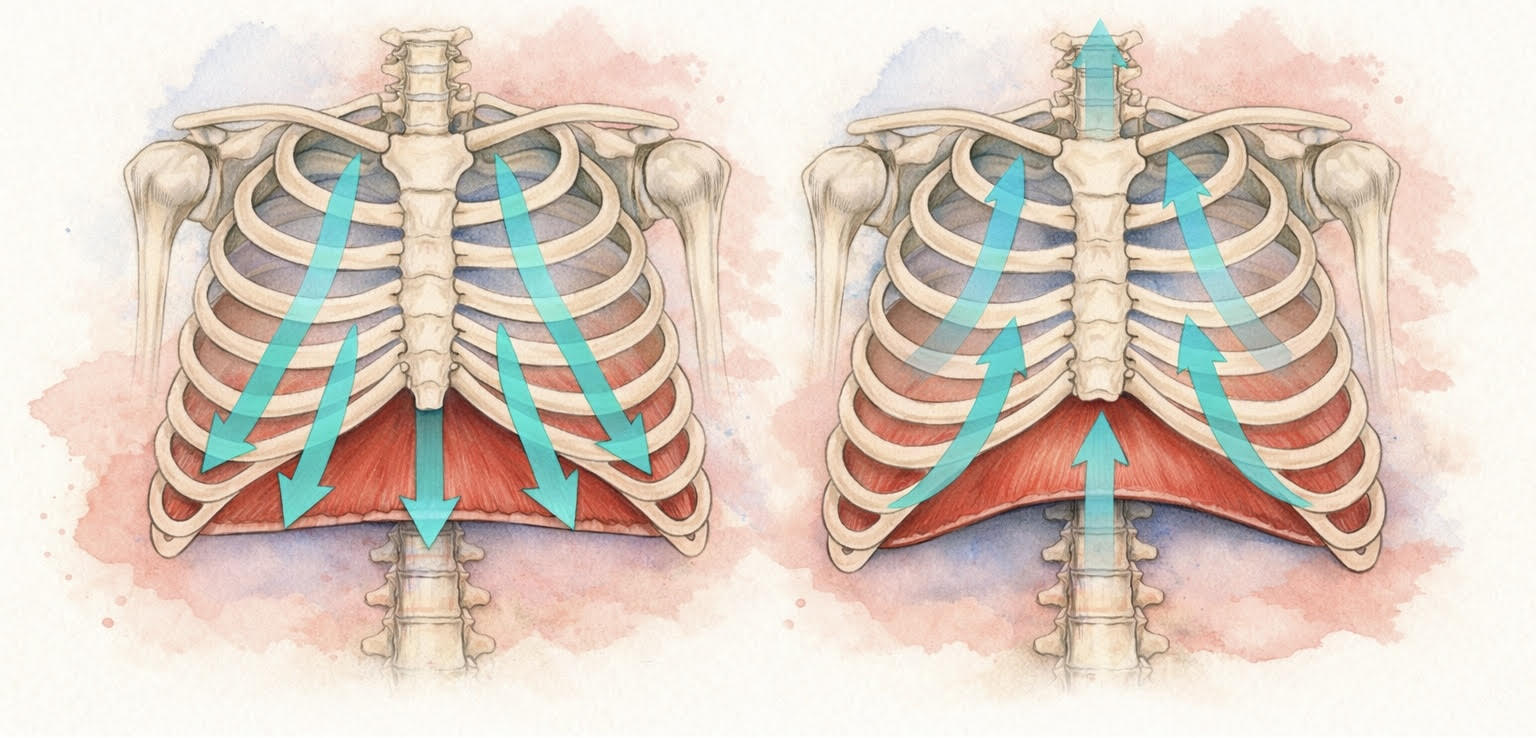
- Core and pelvic floor coordination – every inhale changes internal pressure in the abdomen — and pressure always follows the path of least resistance. During pregnancy and postnatally, that “path” is usually the weakened tissues: the abdominal midline (linea alba) and the pelvic floor. Ribcage mobility is also affected by pregnancy – ribs widen and flare to make space for baby, and it doesn’t always automatically move out of its stiff and stuck position after a birth. When the ribs don’t move well, the diaphragm can’t move well, and the shallow breathing pattern it sets up can’t support optimal pressure management. So with every breath, that internal pressure could work against your attempts at healing your symptoms…or help you to improve muscle tone and function. By learning to expand the breath around the ribs, sides, and back, you spread that pressure more evenly instead of letting it push out through the midline or down through the pelvic floor. This breath also naturally syncs with pelvic floor movement: inhale → diaphragm descends → organs shift → pelvic floor relaxes to accommodate; exhale → pelvic floor recoils and gently contracts. A muscle that can’t fully relax also can’t fully contract, so when this system isn’t working as it should, we need to bring the attention to both aspects. With awareness and repetition, you retrain this system to work as it’s meant to — giving you a built‑in core and pelvic floor workout simply through optimal breathing.
- Posture and spinal support – pregnancy, birth, and the physical load of caring for a baby all contribute to weakening the core and pelvic floor, leaving other muscles to compensate. Long hours feeding, carrying, rocking, and doing life with a toddler on one hip can create tension, imbalance, and habits like leaning on benches for support instead of using your muscles to stay upright. 360° breath helps unwind these patterns. By expanding the breath around the whole torso, tight muscles soften, deep stabilisers re‑engage, and your body naturally lifts into better alignment. Over time, posture becomes supported from within rather than held through effort or strain.
- Emotional steadiness and nervous system regulation – a full, expansive inhale improves respiratory function, which in turn results in better whole-body oxygenation – great for all your cells including heart and brain. It also stimulates the vagus nerve, activating the parasympathetic nervous system — your “rest and digest (or…reproduce)” state. The parasympathetic system activation reduces stress hormones (e.g. cortisol) in your system. It also supports gut function - which happens to be closely tied to immune health - and reduces systemic inflammation, creating an environment for optimal hormonal health. This includes reproductive hormones, the hormones for blood sugar regulation, and neurotransmitters which all have flow-on effects for mood and emotional wellbeing. Each slow, spacious breath becomes a way to calm your system, settle your mind, and feel more grounded in your body.
All of this contributes to your overall wellbeing including:
· Reconnecting with your body while trying to conceive, during a pregnancy, after loss, birth, or any long seasons of stress.
· Feeling strong, centred, and capable in your everyday movements
It’s the quiet, powerful practice that underpins everything else — strength, mobility, balance, digestion, even how grounded you feel in your own skin.
It’s the practice that helps you tune in rather than push through.
It’s the practice that helps you feel like you again.
✨ What 360° Breath Actually Is
Most of us breathe up into the chest or down into the belly.
360° breath invites the breath to expand all the way around — ribs, sides, back body, pelvic floor — like a soft, widening ring.
It’s gentle.
It’s accessible.
And it’s deeply regulating.
When you breathe this way, your diaphragm, ribs, deep core, and pelvic floor begin to move in harmony again — which is essential in every stage of motherhood.
🌸 Pose of the Month — 360° Breath (for all stages) – see it on youtube
How to Practice
- Sit, stand, or kneel comfortably with your spine long but not rigid.
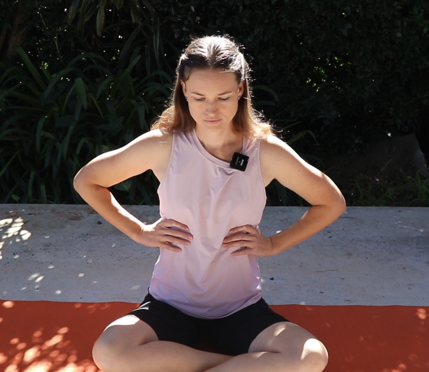
- Place your hands around your ribcage — thumbs may be behind, fingers in front, or reversed – your choice.
- Inhale gently through the nose and imagine your ribs expanding outwards, sideways, and into your back.
- Feel your pelvic floor soften and lengthen on the inhale.
- Exhale slowly and feel everything draw back toward centre — ribs, belly, pelvic floor — without force.
- Continue for 5–10 breaths, letting the movement stay soft, steady, and circular. Option to move the hands around as you go - finding any areas that are not lifting on the inhale. Helping bring focussed attention to the area may encourage further expansion.
Care Notes
- If you feel breathlessness, dizziness, or anxiety, slow the breath and – if possible - encourage the exhale to take a little longer than the inhale.
- If you’re pregnant we’re aiming to avoid compression of Bump - consider lifting the hips onto a pillow, blanket or block if seated or widening your stance. Ensure hands are placed on the sides of the ribs instead of the front.
- If you’re post‑natal and notice heaviness or gripping, soften the inhale and lengthen the exhale. The pelvic floor can feel so vulnerable it may be hard to let it relax on the inhale – practicing just a little at a time and increasing your confidence gradually, or laying down to do it at first (reducing the effect of gravity), may help.
💬 I’d love to hear from you
If this breath practice shifts something for you — physically, emotionally, or simply in how you meet your day — reply and let me know. Your reflections help me shape future offerings, and I’m always grateful for your voice in this community.
If you’re keen for more of this kind of support in the form of longer-play yoga practices you can do at home in your own time, my online courses are for you – find out more details here.
🌿 Until next time, may your breath be your anchor — steady, spacious, and always guiding you home.
I honour the Mama you are becoming,
- Emma
Responses